
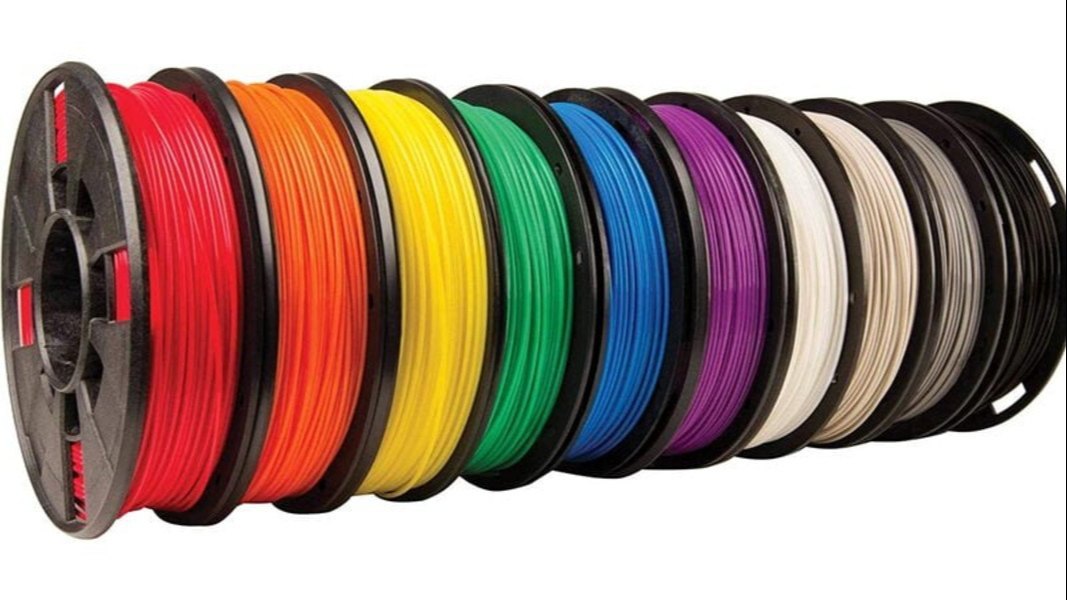

PETG filament is a thermoplastic that is utilized in FDM 3D printing. The name refers to polyethylene terephthalate glycol which is a polyethylene terephthalate (PET) plastic that has been modified. PET is widely applicable in water bottles and food containers, and glycol added enables it to be easily printed and not brittle.
PETG filament is popular due to the fact that it falls between ABS and PLA. PLA can be easily printed, but is not tough. ABS is robust yet more difficult to handle because of distorting and fumes. PETG filament is a stronger and flexible material, but it does not have the same printing hustles. It is also resistant to stress and does not break easily and thus makes it helpful in functional parts.
Its other factor of popularity is that it is resistant to moisture and chemicals. Printed components are not easily absorbed by water, even when it comes to exposure to oils or cleaning agents, printed parts can withstand it more than PLA. This is why PETG filament is a good option when it comes to objects that are utilized in the kitchen or workshop or outdoors.
Durability and Strength to Use in Real Life.
PETG filament has a high impact resistance that is one of its key advantages. The components that are printed with it demonstrate the ability to bend under pressure rather than break. This is a little bit of flexibility that comes with a significant difference when it comes to long term use.
PETG is also a good material in moderate temperatures. Although it will not perform as high temperature materials such as nylon or polycarbonate, it can withstand a higher temperature than PLA. To take an example, a car accessory that has been printed using the PETG filament will not be prone to warping during a hot day.
Another good point is layer adhesion. Layers bond well when printed at the appropriate temperature producing solid parts with high structural integrity. This is why PETG filament is used as a bracket, enclosure, clips, and mechanical parts by many hobbyists and small business people. Prints are also typically given a clean, professional appearance courtesy of the finish that is usually slightly glossy.
Printing Resources and Expectations.
PETG is expected to be a simple filament to print, but it does not react the same as PLA. It needs a higher nozzle temperature, which is normally 220degC to 250degC. Heated bed is also suggested, usually 70degC to 90degC in order to enhance the first layer adhesion.
Stringing is one of these problems. PETG is slightly sticky to melt, and this may leave the fine strands between printed parts. This can be reduced by changing the retraction settings and slowing down the print speed. Cooling fans must be applied in moderation because excessive cooling may influence the bonding of the layers.
Bed adhesion tends to be applied so that it is usually too strong. It may attach itself to some surfaces of a building, therefore, placing a release layer like a glue stick may facilitate the removal process. PETG filament is a reliable PETG, and the results are consistent when it is dialled in.
Widespread Dome Uses at Home and Industry.
Due to the combination of strength and flexibility, the PETG filament is employed in a broad variety of projects. Storage hooks, tool holders, plant pots and tailored organisers are common in homes. It is not easily affected by moisture, hence can be used as bathroom or kitchen accessories.
PETG filament has been commonly used in small-scale production workshops and functional prototypes. It is capable of stress, vibration as well as moderate heat; this allows it to be used in protective covers or in the machine parts. It is durable to the extent that some users print drone frames and RC parts using it.
PETG filament is also trendy in clear. It is capable of making semi transparent prints on light covers or display items but the complete clarity can be attained gender when the print settings are meticulously done. There are numerous choices in colour, including plain basics and luminous and specialty colour.
PETG Filament Quality selection in Australia.
PETG is not as standardized when it comes to its production. Print quality is influenced by consistent diameter, low moisture content and clean winding. Filament may be poorly made and result in clogging, uneven extrusion or weak parts. This is the reason why it is important to purchase a trusted Australian supplier.
Filament Hub has a wide range of PETG filament that can be bought locally by the hobbyists, educators, and professionals. They have a variety of colours and spool sizes to suit the needs of various projects. PETG filament is one that requires consideration based on the compatibility with your printer and the kind of parts you are intending to print because this will lead you to the right choice.
